
Indoor Games for Kids: Fun, Creative, and Perfect for All Ages
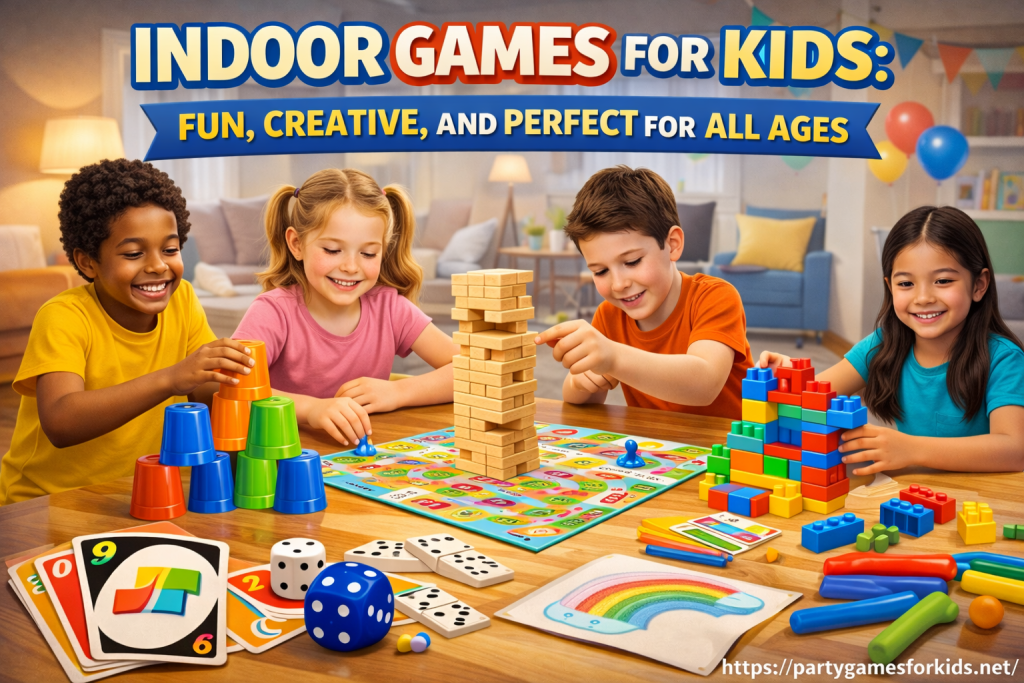
As parents, caregivers, or even teachers, finding fun indoor games for kids is an essential part of keeping them entertained, especially when weather conditions aren’t ideal for outdoor play. Whether it’s a rainy day, a chilly winter afternoon, or simply a time to wind down indoors, indoor games for kids provide hours of entertainment, education, and skill-building.
In this article, we’ll explore some of the best indoor games for kids, covering various age groups, developmental benefits, and easy-to-set-up activities. Let’s dive into some exciting ways to keep kids entertained while they stay inside.
Why Indoor Games Are Essential for Kids
Indoor games offer many benefits beyond entertainment. They play a crucial role in the development of kids’ physical, cognitive, and social skills. Here’s why indoor games are so important:
- Physical Development: Many indoor games require kids to move around, improving their gross motor skills, balance, and coordination.
- Cognitive Skills: Games like puzzles, memory games, and board games help kids enhance problem-solving, critical thinking, and memory.
- Social Skills: Indoor games often encourage teamwork, sharing, and communication. These activities foster positive social interactions.
- Creativity: Some indoor games promote imagination, like role-playing games and art activities, which are vital for fostering kids’ creativity.
Fun and Simple Indoor Games for Kids
Simon Says
How to play: In Simon Says, one player (the leader) gives instructions like “Simon says touch your nose.” Players must follow the instructions only if they are preceded by the phrase “Simon says.” If the leader does not say “Simon says,” and players follow the instruction, they’re out.
Why it’s fun: This classic game encourages kids to listen carefully, follow directions, and enhances their concentration. It’s a great game for improving self-control.
Materials: No materials needed.
Indoor Scavenger Hunt
How to play: Create a list of common household items for the kids to find. You can make the hunt more exciting by giving clues or riddles for each item. The child who finds the most items within a set time limit wins.
Why it’s fun: Scavenger hunts are engaging and interactive. They improve problem-solving, observation skills, and attention to detail.
Materials: Household items, a list of clues or riddles.
Building Forts with Blankets and Pillows
How to play: Gather blankets, pillows, and cushions and let the kids build their own forts. You can make it a fun challenge by adding a theme, like a castle or a spaceship, or by turning it into a competition to see who builds the best fort.
Why it’s fun: This activity promotes creativity and helps develop fine motor skills as kids work together to build and arrange objects. Plus, it’s a cozy way to spend time indoors.
Materials: Blankets, pillows, and cushions.
Treasure Hunt with a Twist
How to play: Set up a treasure hunt by hiding small toys or treats around the house. Each child follows a map or set of clues to find the hidden items. To make it more challenging, add riddles or puzzles they need to solve at each station.
Why it’s fun: Treasure hunts spark excitement and encourage kids to think critically and problem-solve, making them a great way to develop cognitive and motor skills.
Materials: Small items to hide (toys, treats), a map, or clues.
Balloon Volleyball
How to play: Blow up a balloon and use it as a volleyball. Set up a “net” by drawing a line on the floor or using an object as the dividing line. Kids must hit the balloon over the “net” without letting it touch the ground.
Why it’s fun: This game keeps kids active indoors and helps with coordination and teamwork. Plus, it’s a great way to expend energy without needing too much space.
Materials: A balloon, any object to mark the net (tape, rope, a piece of furniture).
Creative Indoor Games for Imagination
Arts and Crafts
How to play: Set up a space for arts and crafts, providing materials such as colored paper, crayons, markers, glue, scissors, and stickers. Encourage the kids to create their own art pieces or make themed crafts like greeting cards, animals, or seasonal decorations.
Why it’s fun: Arts and crafts inspire kids to express themselves creatively. They also develop fine motor skills and focus.
Materials: Paper, crayons, markers, glue, scissors, stickers, or any craft materials available.
Pictionary
How to play: In Pictionary, one player draws a picture based on a word or phrase, and the other players try to guess what it is. You can divide the group into teams and use a timer to make the game more exciting.
Why it’s fun: Pictionary fosters creativity, teamwork, and communication. It’s a great way to have fun and develop drawing and guessing skills.
Materials: Paper, pencils, and a timer.
Indoor Bowling
How to play: Set up your own bowling alley by using empty plastic bottles as pins and a soft ball to roll toward them. Kids take turns trying to knock down as many pins as they can with each roll.
Why it’s fun: This game helps improve hand-eye coordination, motor skills, and teaches kids to aim and focus.
Materials: Empty plastic bottles, a soft ball.
Educational Indoor Games for Learning
Memory Game
How to play: Spread out cards with pictures or words facing down. Players take turns flipping two cards over at a time, trying to match pairs. The game continues until all pairs are matched.
Why it’s fun: This game sharpens memory and concentration. It’s a simple game, but it’s great for enhancing cognitive development.
Materials: A set of matching cards (you can create your own or use a memory card game).
Simon Says with a Twist (Learning Version)
How to play: Add an educational twist to the classic Simon Says game by incorporating math problems, spelling words, or other learning activities into the instructions. For example, “Simon says, hop three times and spell ‘cat’!”
Why it’s fun: This variation makes learning fun by turning it into an active game. Kids practice their math skills, spelling, and focus while playing.
Materials: None (just a group of players and some creative instructions).
Conclusion
Indoor games for kids are an excellent way to ensure your child stays active, engaged, and entertained, even when they can’t go outside. Whether you choose games that involve physical movement, creative thinking, or learning, each game helps develop different skills that are valuable for your child’s growth. From building forts to playing memory games, the possibilities are endless. The best part is that you don’t need a lot of space or fancy equipment to get started. So, the next time the weather keeps you inside, try out some of these fun indoor games, and watch your child’s imagination soar.