
Growth Mindset Goals for Kids: Simple Goal Setting Strategies to Build Confidence and Resilience
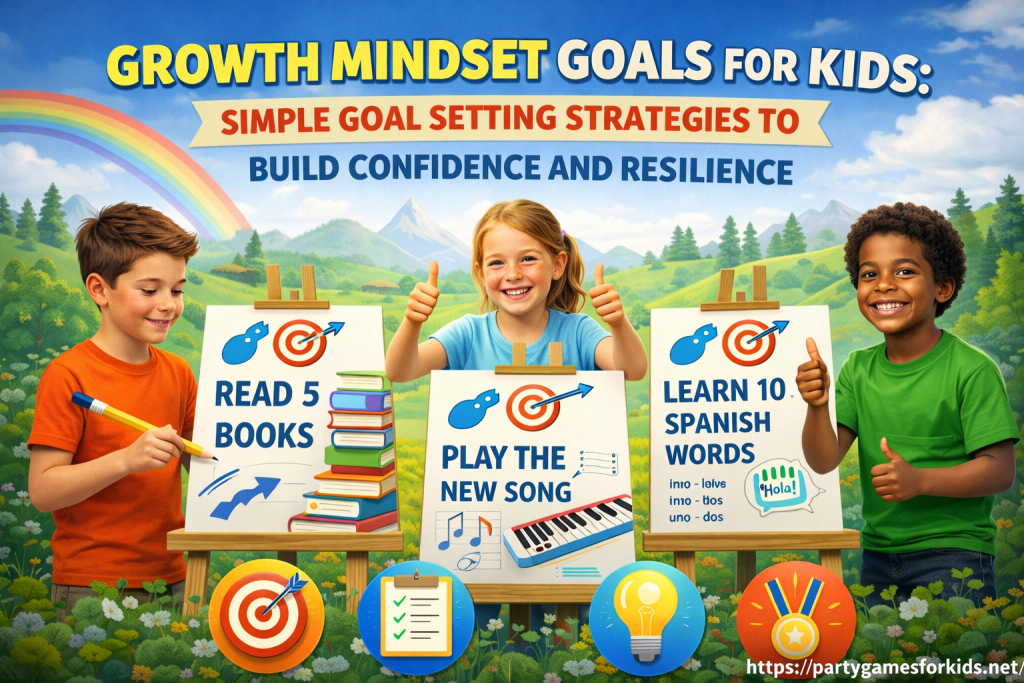
Every child faces moments when something feels hard. Homework feels confusing. A game feels impossible. A mistake feels huge. However, the way kids think about those moments changes everything.
Growth mindset goals for kids help children believe they can improve with effort and practice. In simple words, a growth mindset means “I can get better if I keep trying.” Instead of saying “I can’t do this,” kids learn to say “I can’t do this yet.” That small word yet makes a big difference.
Growth mindset goals focus on effort, learning, and progress. Therefore, kids stop chasing perfection and start chasing improvement. As a result, confidence grows naturally. Even better, resilience becomes stronger over time.
What Is a Growth Mindset for Kids?
A growth mindset is the belief that skills and intelligence can grow through effort. In contrast, a fixed mindset believes abilities are stuck and cannot change. Kids with a growth mindset understand that mistakes are part of learning.
For example, if a child struggles with reading, they do not label themselves as “bad at reading.” Instead, they say, “I need more practice.” Consequently, they stay motivated. Effort replaces fear.
Growth mindset thinking encourages kids to try again. Moreover, it helps them stay calm during challenges. Over time, they become more comfortable facing new tasks.
Why Are Growth Mindset Goals Important?
Goals give direction. However, growth mindset goals focus on improvement rather than winning. That shift changes how children react to success and failure.
When kids set goals like “I will practice math for 15 minutes daily,” they focus on effort. Meanwhile, goals like “I must get 100 percent” create pressure. Therefore, growth goals reduce anxiety.
Children who use growth mindset goals become more confident. They learn that progress matters more than perfection. As a result, setbacks feel temporary instead of permanent.
Most importantly, growth mindset goals teach persistence. When kids expect improvement through effort, they keep going longer. That habit builds long-term success.
How to Set Growth Mindset Goals for Kids
Goal setting should stay simple and clear. First, focus on effort-based goals instead of outcome-based goals. For example, say “I will practice spelling every day” instead of “I must get all words right.”
Next, make goals specific and realistic. Short, clear goals feel easier to manage. Therefore, kids feel motivated rather than overwhelmed.
Also, encourage reflection. After working on a goal, ask, “What did you learn?” Instead of asking only about results. This question shifts focus toward growth.
Finally, celebrate effort. Praise hard work, practice, and persistence. As a result, children connect success with effort rather than talent.
Examples of Growth Mindset Goals for Kids
Growth mindset goals should match a child’s age and interests. Simple goals often work best. For example:
- I will read for 20 minutes every day.
- I will practice my math facts for 10 minutes.
- I will try again when I make a mistake.
- I will ask questions when I do not understand.
- I will practice a new skill each week.
Each goal focuses on action and effort. Therefore, improvement becomes measurable through practice. Over time, confidence increases.
These goals also teach responsibility. Kids learn that progress depends on consistent effort. As a result, they feel more in control of their success.
Growth Mindset Goals at School
School offers many chances to build growth thinking. Students often compare themselves to others. However, growth mindset goals shift attention back to personal improvement.
For example, instead of aiming to be the top student, a child may aim to improve reading speed. That goal feels achievable. Meanwhile, competition pressure decreases.
Teachers can support growth goals by praising effort. Comments like “You worked hard on this” build resilience. Consequently, students feel safe taking risks.
Group projects also provide opportunities. Kids learn to try new roles and skills. Therefore, collaboration strengthens confidence.
Growth Mindset Goals at Home
Home plays an important role in shaping mindset. Parents influence how children see challenges. Therefore, positive language matters.
Instead of saying “You are so smart,” say “You worked really hard.” This small change connects success with effort. Over time, kids adopt the same thinking.
Encourage kids to set weekly improvement goals. Keep them simple and clear. Meanwhile, track progress together. Watching improvement builds excitement.
Also, allow mistakes. Mistakes create learning opportunities. When children see mistakes as normal, fear decreases.
How to Encourage a Growth Mindset Daily
Daily habits shape mindset more than big speeches. Use phrases like “Keep trying” and “What can we learn from this?” These words guide thinking naturally.
Model growth behavior. If you make a mistake, admit it and say how you will improve. Children copy what they see.
Ask reflection questions. For example, “What was hard today?” and “What helped you improve?” These questions build awareness.
Most importantly, stay patient. Growth takes time. However, small steps lead to strong results.
Common Challenges and How to Handle Them
Some kids feel frustrated quickly. When that happens, remind them that learning takes practice. Therefore, encourage short breaks instead of quitting.
Other children fear failure. Help them understand that mistakes do not define them. Meanwhile, share stories of improvement through effort.
Consistency matters. Growth mindset goals require repetition. However, steady encouragement makes the process easier.
Final Thoughts on Growth Mindset Goals for Kids
Growth mindset goals help children believe in progress. They teach that effort creates improvement. As a result, confidence grows naturally.
Instead of chasing perfection, kids learn to chase learning. That shift changes everything. Over time, resilience becomes part of their character.
When children understand that abilities can grow, they face challenges with courage. And that mindset, more than any grade or trophy, prepares them for life.