
Card Games for Kids: Fun, Engaging, and Educational
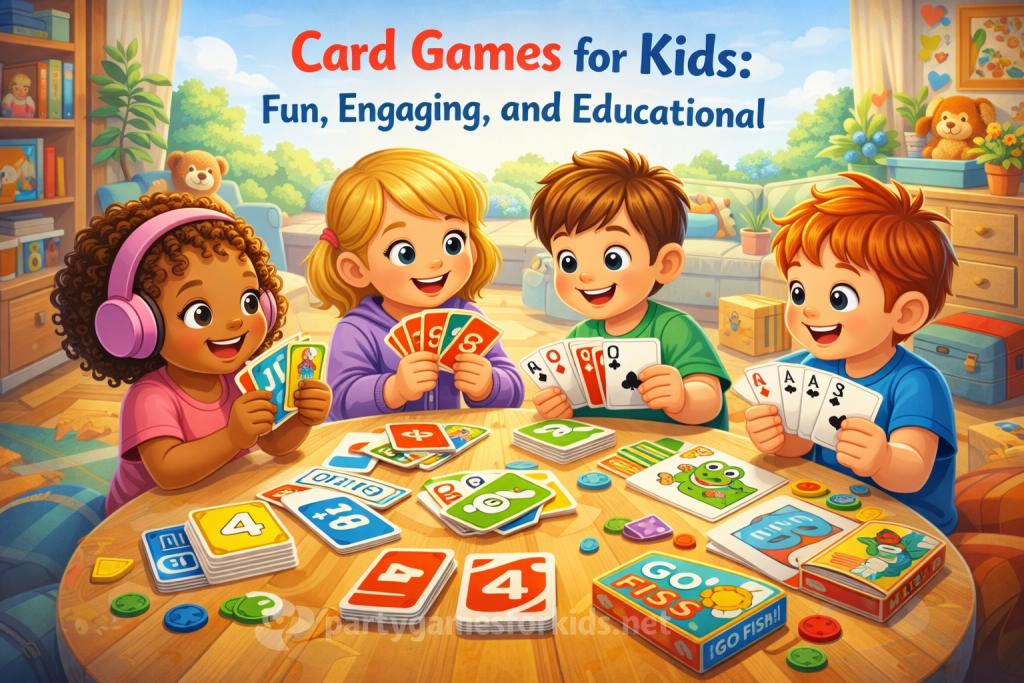
Card games are a fantastic way to engage kids in activities that are not only fun but also educational. Whether you’re looking for a way to pass the time during a family gathering or trying to teach your kids new skills, card games are versatile, easy to set up, and suitable for children of all ages. In this article, we’ll explore some of the best card games for kids, how they can help with cognitive and social development, and why they are such a great addition to your child’s playtime.
Why Are Card Games Great for Kids?
Card games are more than just a way to pass time. They offer a wide range of benefits for children, including:
- Social Interaction: Many card games require turn-taking, communication, and teamwork, helping children develop social skills and learn how to interact with others.
- Cognitive Development: Card games involve strategy, critical thinking, and problem-solving. Kids learn to make decisions, remember rules, and think ahead, which enhances cognitive abilities.
- Motor Skills: Handling cards and organizing them in a sequence helps develop fine motor skills and hand-eye coordination.
- Emotional Growth: Through card games, kids experience winning and losing, which teaches them how to manage their emotions and practice good sportsmanship.
Classic Card Games for Kids
Go Fish
How to play: In Go Fish, players try to collect matching sets of cards by asking other players for specific cards. If the other player has the card, they give it to the asking player; if not, the asking player must “Go Fish” and draw a card from the deck.
Why it’s great: This simple and fun game helps toddlers and younger kids with matching, memory, and social skills. It’s easy to understand and can be played with younger children who are just learning the concept of taking turns.
Materials: A standard deck of cards.
Memory Match
How to play: Memory Match involves laying out cards face down. Players take turns flipping over two cards at a time, trying to find matching pairs. The goal is to remember the positions of the cards and match them before the other players do.
Why it’s great: This game is excellent for improving memory and concentration. It also teaches kids to stay focused and think ahead, making it a perfect game for younger children.
Materials: A deck of cards with matching pairs (you can also use a special memory card set).
Old Maid
How to play: In Old Maid, the goal is to avoid being the player left holding the “Old Maid” card. Players take turns drawing cards from other players’ hands, trying to match pairs. The first player to run out of cards wins, while the one left with the Old Maid card loses.
Why it’s great: This game helps with matching, pattern recognition, and emotional regulation as kids experience the thrill of winning and the disappointment of losing in a lighthearted way.
Materials: A standard deck of cards or a special Old Maid deck.
Card Games for Strategy and Critical Thinking
Uno
How to play: Uno is a fast-paced card game where players match colors and numbers to get rid of their cards. Special action cards like “Skip,” “Reverse,” and “Draw Two” add extra twists to the game, creating opportunities for strategy and surprises.
Why it’s great: Uno teaches kids about strategy, decision-making, and following rules. It also encourages them to think ahead and plan their moves to avoid being the last player with cards.
Materials: Uno deck (or a standard deck of cards with special rules).
Crazy Eights
How to play: In Crazy Eights, players try to get rid of all their cards by matching the top card of the discard pile either by number or suit. Eights are wild and can be played at any time to change the suit.
Why it’s great: This game encourages children to think strategically about when to play their special cards and how to make use of limited moves.
Materials: A standard deck of cards.
Card Games for Learning Numbers and Colors
Snap
How to play: In Snap, players take turns placing cards face up in the center, and whenever a card matches the top card of the pile, players yell “Snap!” and try to grab the pile. The first player to grab the pile wins.
Why it’s great: Snap is great for teaching kids about numbers and quick reflexes. It’s fast-paced and fun, keeping kids engaged while improving their ability to identify and recognize numbers quickly.
Materials: A standard deck of cards.
War
How to play: In War, players each take a card from their deck and place it face up. The player with the higher card wins both cards. The game continues until one player has all the cards or until a set time limit is reached.
Why it’s great: War is a simple card game that helps with number recognition, sequencing, and understanding basic comparisons. It’s also great for teaching kids patience and the importance of following a sequence.
Materials: A standard deck of cards.
Card Games for Social Skills and Teamwork
Spades (for older kids)
How to play: Spades is a trick-taking game typically played by four players in two teams. The goal is to take as many tricks (rounds) as possible, with players betting how many tricks they think they can win.
Why it’s great: Spades promotes teamwork and communication, as players must collaborate with their partner to strategize and win the most tricks. It also helps older kids practice critical thinking and planning.
Materials: A standard deck of cards.
Slapjack
How to play: In Slapjack, players take turns placing cards face-up in the center. If a jack is played, players race to slap it. The first player to slap the jack wins the round and takes all the cards in the center.
Why it’s great: This fast-paced game improves reaction times and social interaction as kids work together in a competitive yet friendly environment.
Materials: A standard deck of cards.
Conclusion
Card games for kids are an excellent way to have fun while fostering important skills such as memory, strategy, and social interaction. From classic games like Go Fish and Memory Match to more challenging games like Uno and Spades, card games offer a wide range of benefits for kids of all ages. Whether it’s a family night, a school event, or just a rainy day indoors, card games are a timeless activity that never goes out of style. Not only will your child have a great time, but they’ll also be learning and developing new skills that will serve them well in the future.